
Identity Security and Privacy
Introduction
The Identity Security & Privacy (ISP) group, formerly Biometrics Security & Privacy (BSP), conducts research on trustworthy identity in the age of AI. We develop advanced methods for identity recognition, for example using biometric identifiers such as face, voice and physiological signals, and study how these systems can operate reliably in real-world, unconstrained settings.
A central focus of our work is the security and integrity of identity systems, including resilience against presentation attacks, morphing attacks, deepfakes, synthetic identity fraud and adversarial machine learning attacks. We also design privacy-preserving technologies, including irreversible and unlinkable biometric representations, to ensure strong protection of personal data.
In parallel, we investigate multimodal fusion, fairness and bias mitigation, and the use of synthetic data, with a strong emphasis on reproducibility and rigorous evaluation. Through these efforts, we aim to build secure, privacy-preserving and trustworthy identity technologies for societal and industrial applications.


Alumni
Ongoing projects
Challenges related to “on the move” biometrics are 1/ lower quality live biometric data, and 2/ no time to read the ePassport. Also, fully automatic biometric border control solutions, even with a stop allowed, are currently deployed only for pedestrians in controlled environment. Carmen offers biometric solutions for non-stop border control, suitable for pedestrians and vehicles, in uncontrolled environmental conditions. Travellers’ authentication is achieved in two steps: 1) the biometric data (face, iris, periocular) of travellers is securely stored in their smartphones, thanks to a DTC (Digital Traveler Credential).2) the biometric data is securely transferred from the DTC to the police infrastructure, and compared to the live biometric data collected as the traveller crosses the border control point.
To address a variety of environmental conditions, Carmen uses both NIR and RGB live biometric images and compare them to the reference images that have been acquired with one type of lighting only. To make biometrics more robust, Carmen has a multimodal approach on face iris and periocular regions. In the fraud detection, Carmen detects presentation attacks on moving travellers and searches strange travellers’ behaviour. To address small and large border control points, Carmen enables the use of fix and body-worn cameras. To address travellers in cars or lorries, Carmen detects face images in slowly moving vehicles, through the windows. Travellers in coaches are controlled by border guards walking through the coach, using dedicated portable equipment as they walk. Carmen addresses the robustness of DTC via data injection attacks. Of course, Carmen complies with the existing legal and ethical standards, and privacy is a central concern. Carmen solutions will be demonstrated in operational conditions over the UK - France border, as French and UK border authorities are part of Carmen consortium, using the infrastructure proposed by the partner Brittany Ferries.
Along the whole value chain in using data for economic purposes, guidelines and tools are required to make the business of the different stakeholders successful, and the end-users confident that none of their rights are endangered. CERTAIN addresses these needs and delivers solutions for data holders, dataspaces and AI systems providers, and AI systems deployers, which are the primary actors of the data and AI value chain. They must be compliant with applicable European regulations, must reach this compliance in a timely manner, and at reasonable cost.
CERTAIN delivers guidelines and technical tools to help with compliance, to assess data quality, to measure biases in datasets, and to protect privacy. CERTAIN sets the foundation of AI certification: it translates the regulations to business terms, builds a directory of certification entities per business, develops a platform to streamline the certification process, and tools for AI system providers and certification entities so that they could respectively prepare and run a certification process.
In case of security breach, not only privacy may get compromised, but also AI models may become useless and lead to extremely damageable decisions. To make sure that AI-based products are of high quality and reliability, CERTAIN develops security tools and methods, specifically suitable for dataspaces and AI systems.
CERTAIN addresses the environmental footprint of the AI value chain. Innovative techniques are elaborated to reduce energy consumption when building and running AI systems. This is beneficial not only for the green deal but to reduce cost for AI stakeholders.
As importantly, CERTAIN considers the end-users perspective, and provides templates and guidelines that may be used by AI systems deployers to reassure end-users on the use of their private data. The project tests its results on seven operational pilots in six different business areas, considering all the actors along the AI value chain.
Context: Access to factual information is essential for democratic decision-making, public trust, and civic engagement, yet artificial intelligence (AI) enables large-scale creation and dissemination of manipulated content, fabricated narratives, and content amplification that can distort public perception, erode confidence in democratic institutions, and polarize political discourse. These risks threaten to reshape political debates, influence electoral outcomes, and undermine public trust in media sources in Switzerland. Democratic values can be upheld by developing AI tools and governance frameworks to counter disinformation and monitor media framing.
Goals: DEMO-AI is an interdisciplinary research project, driving advances in computing to enhance the resilience of democracy, integrating expertise from law, journalism and communication studies, media and information literacy to ensure that AI-supported solutions align with democratic values and regulations. Four project goals include: AI tools for analyzing news media framing; AI tools for detecting manipulation of audio-visual media; legal research on regulatory frameworks for AI and disinformation in Switzerland; and engaging both the public and professionals in evaluating and testing media tools.
Expected Impact: DEMO-AI will produce tools to analyze issue framing and related narratives in Swiss media, facilitate the detection of audio-visual disinformation, and understand legal challenges. These tools will be designed, tested, and refined in collaboration with the general public and professionals, placing their specific needs at the center, thus ensuring real-world applicability. Through societal impact activities, the project extends beyond technology, addressing key challenges across AI, democracy, and policy.
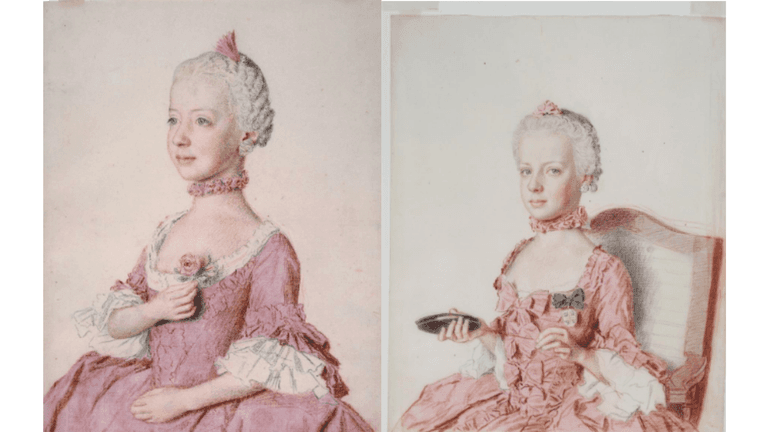
Le projet INTERART se propose de croiser des technologies de reconnaissance faciale hétérogène (HFR) avec des méthodologies issues des sciences criminelles, ainsi que des sciences humaines en histoire de l’art et histoire culturelle, pour identifier des portraits historiques, notamment ceux de Marie-Antoinette (reine de France) et de Marie-Caroline (reine de Naples), dessinés par Jean-Étienne Liotard (Genève 1702-Genève 1789) et conservés au Musée d’Art et d’Histoire de Genève (MAH). Ce projet interdisciplinaire vise à prouver les identités des personnages représentés en utilisant des technologies avancées et des analyses biométriques novatrices. Le soutien financier permettra de tester ces technologies sur les portraits en question, avec l’objectif de révéler un portrait inconnu de Marie-Antoinette lors d’une exposition qui se tiendra au MAH, du 3 octobre 2026 au 7 février 2027.
The aim of the INTERART project is to combine heterogeneous facial recognition (HFR) technologies with methodologies from the criminal sciences, as well as the humanities in art history and cultural history, in order to identify historical portraits, in particular those of Marie-Antoinette (Queen of France) and Marie-Caroline (Queen of Naples), drawn by Jean-Étienne Liotard (Geneva 1702-Geneva 1789) and kept at the Musée d'Art et d'Histoire de Genève (MAH). This interdisciplinary project aims to prove the identities of the figures depicted using advanced technologies and innovative biometric analyses. The financial support will enable these technologies to be tested on the portraits in question, with the aim of revealing an unknown portrait of Marie-Antoinette at an exhibition to be held at the MAH from 3 October 2026 to 7 February 2027.
Past projects
Standard machine learning systems require massive data and huge processing infrastructures, but the main limitation to their spreading comes from the need of the empirical and rare knowledge of an experienced data scientist able to set and adjust their behavior over time. The ALLIES project will lay the foundation for development of autonomous intelligent systems sustaining their performance across time. Such unsupervised system will be able to auto-update and perform self-evaluation to be aware of the evolution of its own knowledge acquisition. It should adapt to a changing environment by following a given learning scenario that balances the importance of performance on past and present data to avoid unwanted regression. Such systems could not be developed without adapted metrics and protocols enabling their objective and reproducible evaluation. This evaluation should assess the performance on the given task and quantify the effort required to reach it in terms of unsupervised data collected by the system and of interaction with humans in the case of active-learning. The ALLIES project will develop and disseminate those metrics and protocols. They will be available to european actors via an open evaluation platform dedicated to reproducible research. An evaluation campaign and a workshop will be organised to engage the community on this path. By publicly releasing the evaluation protocols and data, by releasing a dedicated evaluation platform and by developing autonomous systems for two tasks: machine translation and speaker diarization, we believe that the ALLIES project will boost the development of intelligent lifelong learning systems in Europe.
Building, testing and adapting bespoke speaker identification models to be used in IDIAP's 'Bob.Spear' speaker recognition software
With various forms of biometric technologies becoming available, there is a growing need for scientists who are able to assess the merits of these technologies when applied to forensics. The Marie Curie ITN "Bayesian Biometrics for Forensics", or BBfor2, will provide a training infrastructure that will educate Early Stage Researchers in the core biometric technologies of speaker, face and fingerprint recognition, as well as the forensic aspects of these technologies. According to modern interpretation of evidence in court, biometric evidence must be presented as likelihood ratios. The calibration of likelihood ratios of individual behavioural and physical biometrics and of combinations of biometric modalities, including measures of the quality of the traces, is a unifying topic in all research projects in this Network. The Network will conduct research in the core biometric detection areas of speaker, fingerprint and face recognition. The working experience in forensic research environments will educate the ESRs to become experts in the aforementioned biometrics modalities, with the application of forensic research in mind. The multi-disciplinary training makes the ESRs very employable in forensic sciences and governmental bodies such as law enforcement institutions, as well as research and development departments of industry. The training of ESRs will be realized as individual PhD projects at various research labs, including a forensic institute. Apart from training at their host institute and secondments with other network partners, the ESRs will receive training in dedicated Summer Schools on Biometric Signal Processing, Bayesian Techniques in Forensic Applications and Legal Issues in Forensic Applications. The Network combines 8 European Universities and a leading Forensic Institute; it is augmented by a biometric industrial, a research institute and a forensic science services provider, where secondments of the ESRs will take place.