
Medical Artificial Intelligence
The Medical Artificial Intelligence research group (MedAI) was established in 2018 with the primary objective of developing and applying Artificial Intelligence (AI) methods to support clinical decision-making across various medical disciplines.

Introduction
The Medical Artificial Intelligence research group (MedAI) was established in 2018 with the primary objective of developing and applying Artificial Intelligence (AI) methods to support clinical decision-making across various medical disciplines.
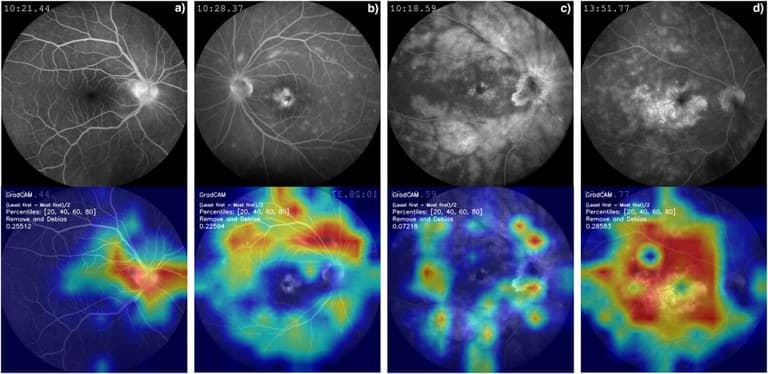
The group focuses on the analysis of medical images, physiological signals, and health data to extract clinically meaningful information for diagnosis, disease monitoring, and risk assessment. Core application domains include ophthalmology, radiology, and neurophysiology, with particular emphasis on challenging settings such as small datasets, heterogeneous acquisition conditions, and evolving clinical protocols. Typical use cases range from disease grading in inflammatory eye conditions to sleep analysis and seizure prediction from EEG, as well as computer-aided detection and risk modelling using multimodal health data.
Methodologically, MedAI develops machine learning and signal processing approaches tailored to clinical constraints. This includes deep learning and foundation models for multimodal data, combining images, time-series signals, and structured or longitudinal health data. A strong focus is placed on generalisation and robustness, enabling models to transfer across hospitals, devices, and populations. The group also investigates domain adaptation, efficient learning under limited data, and scalable pipelines for real-world deployment.
A central pillar of the group’s research is trustworthy AI in healthcare. This encompasses the evaluation and mitigation of demographic bias, interpretability of model decisions, and the systematic validation of models under clinically realistic conditions. The group contributes methods to assess trade-offs between fairness and performance, and develops tools to ensure that AI systems remain reliable and equitable when deployed in practice.
MedAI follows a reproducible and collaborative research methodology, combining open scientific software, rigorous experimental design, and close interaction with clinical partners. This enables the development of AI systems that are not only technically sound, but also clinically relevant, transparent, and ready for translation into healthcare environments.
Current group members
Alumni
Ongoing projects
Artificial Intelligence (AI) has become a powerful and pervasive technology in recent years, influencing numerous aspects of our daily lives. We encounter AI through recommendation algorithms in online stores, voice-activated smartphone assistants, or the widespread use of technologies like ChatGPT. However, its rapid growth and integration into society raise complex questions and concerns among the public. Public opinions on AI vary widely; while some people are enthusiastic about its potential to revolutionize industries and enable breakthroughs in fields such as medicine, others fear that AI could lead to undesirable outcomes, such as a loss of human control or privacy. These views are often shaped by media narratives and the competing interests of different stakeholders, which play a significant role in influencing both public opinion and policy decisions.
Our team of scientists and communication experts aims to enhance the understanding of AI technologies among the Swiss people, with a particular focus on teenagers and female students, to create a positive societal impact. Building on the foundations of our previous project, NewsOnAI, we will expand beyond traditional media such as newspapers and employ diverse methods, including artistic performances and interactive exhibitions. We will design these activities to be highly interactive, encouraging active participation and dialogue. Activities will include themed theater plays that explore AI’s impact on everyday life, exhibitions where participants can interact with AI tools, and workshops specifically designed for teenagers and female students to discuss AI’s future role in society. Feedback collected will include real-time audience reactions, structured questionnaires, and focus group discussions, which will be analyzed to continuously refine and adapt our engagement strategies.
Our primary audience includes Swiss citizens interested in cultural activities, particularly teenagers who are keen to follow new trends. Additionally, we are committed to addressing gender aspects by designing content and activities that specifically appeal to female students. We aim to inspire and empower young women to take on more prominent roles in shaping the digital world, acknowledging that they have historically been underrepresented in these fields. As societal attention shifts toward greater inclusion, our project will contribute to fostering a more balanced and equitable digital future.
While many individuals in our target groups may lack in-depth technical knowledge of AI, they often encounter new AI products, companies, and social issues through various media channels, including newspapers and science fiction movies. As a result, they may be aware of recent developments but also susceptible to misunderstandings and controversies related to technologies such as ChatGPT, Elon Musk's brain-chip startup, and other emerging AI applications. It is crucial to recognize that media portrayal significantly influences public opinion on AI, both positively and negatively. Media creators, even if they are not experts in AI, often produce content that captures public attention, which high-profile figures, including entrepreneurs, CEOs, and politicians, may leverage to advance their agendas. This can sometimes lead to skewed public perceptions, whether intentionally or unintentionally. Given this landscape, it is essential for AI scientists to collaborate with media creators, providing evidence-based insights to ensure accurate and balanced information is shared with the public. Our project fosters such collaboration, ensuring that both the potential and limitations of AI are clearly communicated. By sharing our findings through diverse media outlets, we aim to reach a broad audience, extending beyond Switzerland. Furthermore, our proactive engagement efforts will foster dynamic, two-way communication between scientists and the public, using interactive methods in exhibitions and theater plays to engage teenagers and female students specifically. Analyzing the feedback from these initiatives will provide invaluable insights into public perspectives on emerging technologies. This understanding will guide scientists in pursuing research directions that effectively address societal concerns, demonstrating the tangible benefits of our project for both scientific advancement and societal well-being. We anticipate that our efforts will have a multiplying social impact over time, promoting informed public discourse and a deeper understanding of AI technologies.
Project DREAM aims to develop a scalable foundation model for
multi-channel EEG signal analysis, spanning from basic polysomnography
to high-density and intracranial recordings. The goal is to create a
unified AI model capable of adapting to various EEG configurations while
maintaining simplicity, interpretability, and computational efficiency.
By leveraging convolutional neural networks and attention mechanisms,
the model will extract robust features for diverse tasks, including
sleep stage classification, epilepsy detection, and cognitive function
assessment. Collaborations with leading hospitals will provide
real-world datasets for validation, ensuring the model’s generalization.
Ultimately, this project seeks to advance AI-driven biomedical signal
processing, enhancing diagnostic and monitoring capabilities in
neurology and sleep medicine.
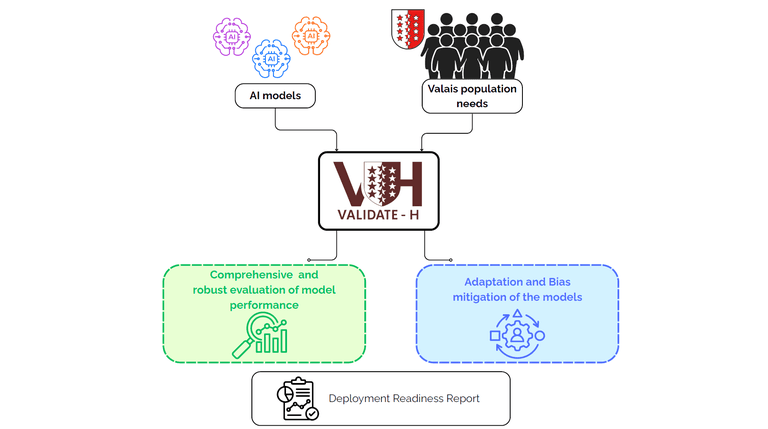
The algorithmic bias remains one of the key challenges for the wider applicability of Machine Learning (ML) in healthcare. Statistical modeling of natural phenomena has gained traction due to increased representation capacity and data availability. In medicine, particularly, the use of ML models has increased significantly in recent years, especially to support large scale screening, and diagnosis. However impactful, the study of demographic bias of newly developed or already deployed ML solutions in this domain remains largely unaddressed. This is particularly true in the medical imaging domain, where it remains challenging to associate demographic attributes with features. Out of the most recent results, the "impossibility of fairness" establishes some criteria for demographic impartiality cannot be reached simultaneously. Among other factors, the lack of raw data, in particular for intersections of minorities, is one of the greatest issues that remain unaddressed due to their challenging nature. This proposal addresses three important challenges in the domain of ML fairness for medical imaging: (i) Create novel ways to train ML models for medical imaging tasks, that can be automatically adjusted to become more useful (maximize performance), group or individually fair, (ii) Quantify fairness boundaries of ML models and associated development data, and finally, (iii) Build systems whose joint performance with humans in the decision loop is fair towards various individuals and demographic groups. To achieve these goals, we will develop a novel evaluation framework and loss functions that take into account model utility together with all aspects of demographic fairness one may wish to address. A generative framework, trained to isolate tunable demographic features, will provide large-scale data simulation covering minorities and intersections. We will then study fairness (safety) boundaries through a modified learning curve setup, analyzing and quantifying limits in both ML models and training data. Finally, we will study how humans-in-the-decision-loop affect the fairness of hybrid human-AI systems, and address post-deployment utility/fairness tuning by embedding weight coefficients directly into the trained model. The development of methods and tools to detect, mitigate, or remove bias will improve the safety of ML models deployed in healthcare. We expect our work will help define new operational boundaries for the responsible deployment of artificial intelligence tools.